Christmas Cows - Clipart Review
As a designer who spends more time than I care to admit staring at stitch lines and testing thread tension, I don’t just look for pretty pictures. I look for functionality. When a new asset lands in my inbox, my first question is never "Is it cute?" It is "Will this hold up on a sweatshirt?" or "Will the details get lost in a small hoop?" Today, I am putting Christmas Cows - Clipart through its paces. This isn't just about holiday cheer; it is about whether this illustration can stand up to the rigors of real-world embroidery production for craft businesses, Etsy sellers, and handmade product creators.
First Impressions: Mood and Visual Personality
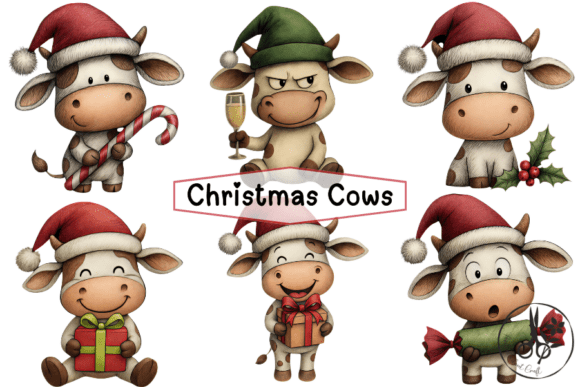
The moment you open this file, the vibe is immediate. It strikes a balance between rustic charm and modern whimsy that feels perfectly timed for the current market. The mood is cozy but not cluttered. In an era where consumers are tired of overly complex, busy designs that feel like they were generated by an algorithm, this clipart offers a breath of fresh air. The visual personality is approachable, friendly, and distinctly seasonal without being cliché.
From a design perspective, the composition works well because it leaves room for breathing space. There is a natural negative space that suggests how this could be framed in an embroidery hoop. It doesn’t scream for attention with chaotic energy; instead, it invites the viewer in. For those creating holiday embroidery collections, this kind of cohesive aesthetic is crucial. It signals to the buyer that the creator cares about taste, not just volume. The shapes are clean, which is the first green light for any machine embroidery conversion.
Real-World Application: Where Does This Design Shine?
I have been thinking about where Christmas Cows - Clipart would fit best in a commercial workflow. My mind immediately went to custom apparel and personalized gifts. Specifically, I see this performing exceptionally well on heavyweight cotton blends for sweatshirts. The sturdy nature of a sweatshirt fabric provides the perfect foundation for a mid-density design. Imagine a cream or heather grey crewneck with this motif centered on the chest or placed slightly off-center on the back. It screams "boutique branding."
Beyond apparel, this design has strong potential as a tote bag design. Canvas totes are a staple for craft fairs and online shops. The durability of canvas means you can push the stitch density a bit higher if needed, allowing for rich texture in the cow’s coat or the holiday elements. However, I also see this working beautifully as an embroidered patch for denim jackets or beanies. The circular or oval framing often associated with cow-themed art lends itself naturally to patch construction.
For the Etsy seller or small shop product owner, versatility is key. This clipart could easily translate into kitchen textiles. A tea towel with a subtle, embroidered version of this scene adds a touch of farmhouse chic to a customer’s home. It fits the trend of "hygge" living—cozy, simple, and warm. It also works for nursery decor items, such as burp cloths or small blankets, provided the scale is adjusted appropriately. The theme is gentle enough for babies but fun enough for adults.
Technical Performance: Stitching Clarity and Detail
When evaluating an illustrations category asset for embroidery, detail level is the make-or-break factor. Christmas Cows - Clipart appears to rely on clear outlines and solid color blocks rather than intricate gradients. This is a smart choice for machine embroidery. Complex shading often requires thousands of stitches and high-end machines to render correctly, whereas bold shapes read clearly even on lower-cost consumer machines.
If converted properly, the use of satin stitch for borders and fill stitch for larger areas should yield a crisp result. The contrast between the cow’s features and the holiday accents (like hats, scarves, or ornaments) will likely pop well, especially when paired with contrasting thread colors. For instance, using a deep red or forest green thread against a white or light beige background will enhance the festive feel without overwhelming the eye.
However, designers must remain vigilant about stitch density. If the original artwork has too many fine lines close together, they may merge during stitching, losing definition. Always inspect the vector paths before digitizing. If the design includes tiny text or very thin decorative accents, consider simplifying them. In embroidery, less is often more. A simplified version of this clipart might actually sell better than a hyper-detailed one because it ensures a faster production time and a cleaner final look.
Cautions: Where to Use Carefully
No design is universal, and Christmas Cows - Clipart has specific constraints. I would advise against using this on highly textured fabrics like heavy bouclé or rough burlap unless you are doing a large-scale application. The texture of the fabric can interfere with the precision of the stitches, making the cow’s features look muddy. Similarly, avoid stretchy knits like spandex-blend activewear. The distortion from the stretch can warp the symmetry of the design, which is particularly noticeable in animal portraits.
Small hoop sizes are another area of caution. If you attempt to fit this design into a 4x4 inch hoop, you risk losing critical details. The eyes, horns, or small holiday props might become indistinguishable blobs of thread. For these smaller applications, I recommend scaling down the concept rather than the entire image, or focusing on a single element from the clipart rather than the full scene.
Dense stitch areas should also be monitored. If the design calls for excessive fill in a small area, it can create a stiff, uncomfortable spot on clothing. This is especially important for custom apparel worn against the skin, like baby clothes or inner cuffs. Ensure your digitizer uses appropriate underlay stitches to keep the fabric flat and prevent puckering.
Strategic Value for Your Business
From a business standpoint, Christmas Cows - Clipart offers high perceived value. Holiday-themed items command premium prices, especially in November and December. By using a unique, well-composed clipart like this, you differentiate your shop from competitors who are using generic, overused clipart. It builds brand consistency and trust. Customers recognize quality when they see it.
This asset can also serve as a printable mockup for digital products. Even if you do not offer physical goods, having high-quality visuals of this design can help you sell digital patterns or planning templates. It expands your revenue streams beyond just finished goods.
Practical Designer Notes
- Test First: Always run a test stitch on scrap fabric that mimics your final material. Check how the threads interact with the fabric weave.
- Check Contrast: View your design in black and white. If the elements blend together, adjust the colors or simplify the shapes.
- Stabilizer Choice: Use a stabilizer that matches the weight of your fabric. For delicate items, a tear-away might be sufficient; for heavy coats, a cut-away is safer.
- Licensing: Confirm the licensing terms before selling finished items. Some clipart allows commercial use for limited quantities, while others require extended licenses for high-volume production.
- Hoop Size: Verify the maximum hoop size required. Plan your layout to ensure the design fits comfortably within standard hoops to avoid re-hooping errors.
In conclusion, Christmas Cows - Clipart is a versatile, charming, and commercially viable asset for the serious embroiderer. It balances aesthetic appeal with technical feasibility, making it a strong candidate for your next holiday collection. Just remember: great embroidery starts with great planning. Test your stitches, respect the fabric, and let the design speak for itself.